Timeline Event Details年表のくわしい話
The stories behind each yearそれぞれの年の物語
More about every year on the timeline: the people, the letters and the photos behind it, in the words of those who were there wherever the archive has them. 年表のそれぞれの年について、その背景にある人々、手紙、写真をくわしく紹介します。資料に残っている場合は、その場にいた人たちの言葉で伝えます。
- 1918
- 1930
- 1934
- 1936
- 1939
- 1941
- 1942
- 1947
- 1950
- 1960
- 1963
- 1968
- 1970s–2000s
- 2013
- People to remember心に留めたい人々
June 1, 19181918年(大正7年)6月1日
A branch on Sutter Streetサター街の分館
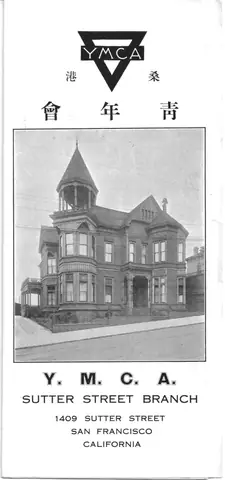
Kiyoshi Tomizawa came to the United States in 1903 and graduated from Miami University in Ohio in 1912. When Japanese Christians in San Francisco organized a branch of the YMCA on June 1, 1918, he was asked to be its secretary, and he stayed for 21 years.キヨシ・トミザワは1903年に渡米し、1912年にオハイオ州のマイアミ大学を卒業しました。1918年6月1日、サンフランシスコの日系キリスト者がYMCAの分館を組織すると主事を頼まれ、21年間その職にありました。
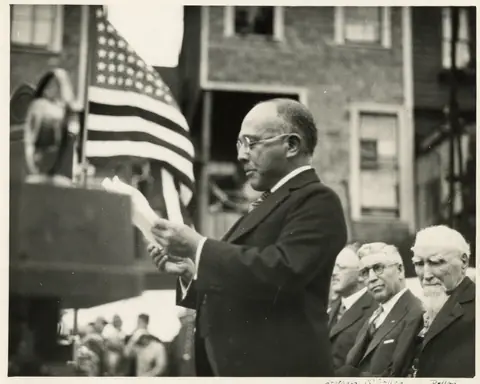
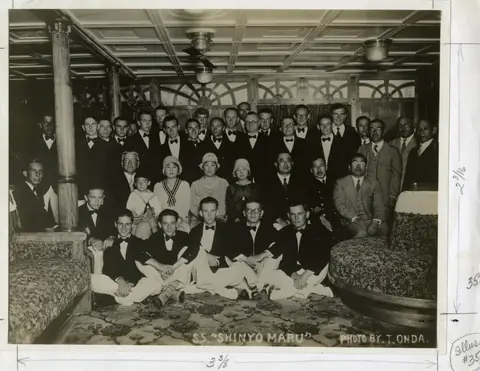
The branch met in a Victorian house at 1409 Sutter Street, and by Tomizawa’s count it helped more than ten thousand newcomers to the city in its first ten years. The archive from these years also holds a photo of Japan’s ambassador, Katsuji Debuchi, giving a speech.分館はサター街1409番地のビクトリア様式の家に集い、トミザワによれば最初の10年間で1万人以上の新来者を助けました。この時代の資料には、演説する出淵勝次駐米大使の写真も残っています。
March 25, 19301930年(昭和5年)3月25日
Building a home of their own自分たちの会館を
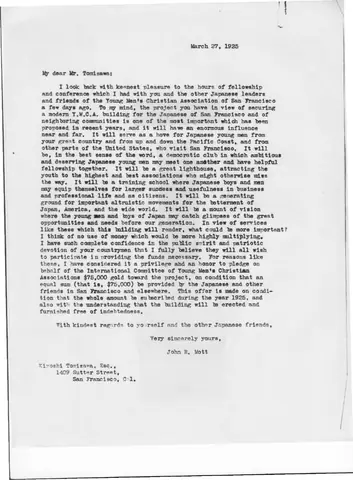
John R. Mott’s 1925 promise of $75,000 came with a condition: the community had to raise as much. It took five years of letters, campaigns and a fundraising trip to Japan, where Viscount Shibusawa gathered ¥23,500. The whole story is told on the Building History page.1925年、ジョン・R・モットの7万5千ドルの約束には、地元が同額を集めるという条件がありました。5年にわたる手紙、募金運動、日本への募金の旅(渋沢子爵が2万3,500円を集めました)の末に実現したのです。くわしくは建物の歴史のページをご覧ください。
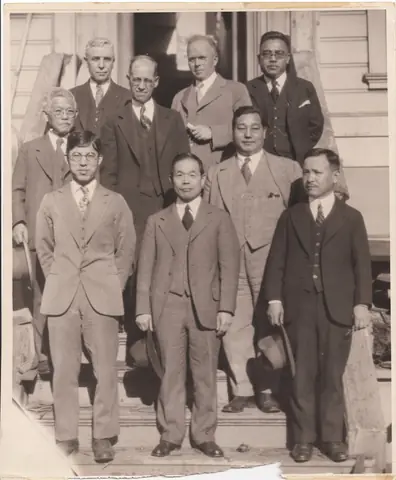
On March 25, 1930, American and Japanese committeemen posed on the steps of one of the old buildings on Buchanan Street, soon to be torn down for the new Y.1930年3月25日、日米の建設委員は、まもなく新しいYのために取り壊されるブキャナン街の古い建物の階段で記念撮影をしました。
Summer 19341934年(昭和9年)夏
Teams, trips and campチーム、遠足、キャンプ
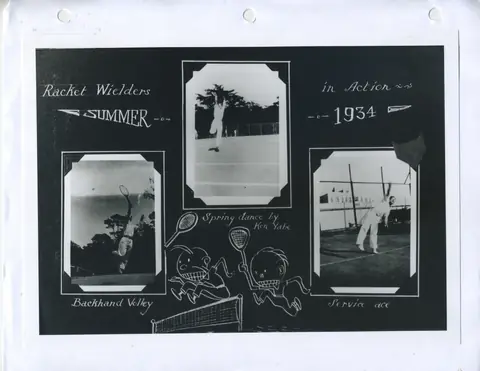
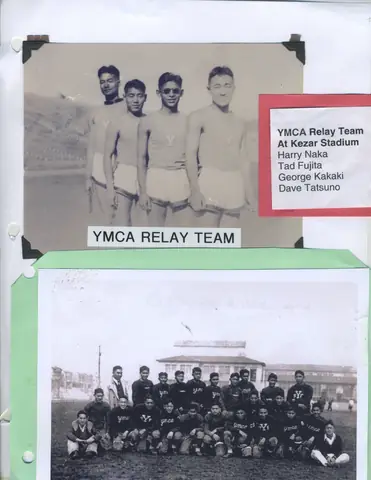
Even before the new building opened, the Y was where boys grew up. Its teams played tennis, baseball, basketball and football and ran relays at Kezar Stadium. Albums from these years are full of nicknames: “Speed” Onizuka, “Aqua-Ace” Baba, and the “Racket Wielders” of summer 1934.新しい会館ができる前から、Yは少年たちが育つ場所でした。テニス、野球、バスケットボール、フットボールのチームがあり、ケザー・スタジアムでリレーを走りました。当時のアルバムは、「スピード」オニヅカ、「アクア・エース」ババ、1934年夏の「ラケットの使い手たち」など、あだ名であふれています。
In 1929 Tomizawa wrote proudly that at a contest of sixteen Northern California YMCAs, “our boys ranked the third although our membership is not so large as the others.” Summers meant camp and trips to Muir Woods and Paradise Cove.1929年、トミザワは北カリフォルニアの16のYMCAが競った大会で「会員数はほかより少ないのに、わが少年たちは3位になった」と誇らしげに書いています。夏はキャンプや、ミューア・ウッズ、パラダイス・コーブへの遠足の季節でした。
January 12, 19361936年(昭和11年)1月12日
1530 Buchanan Streetブキャナン街1530番地
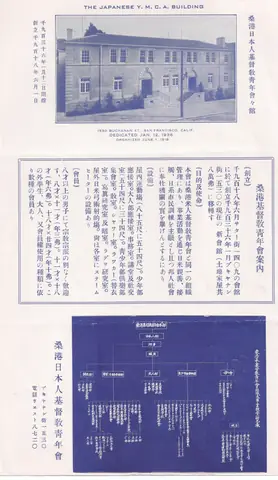
The new building was dedicated with an 85-by-54-foot gym, clubrooms, a photo darkroom, a radio room and an outdoor archery range. Boys and men of every faith were welcome. Its Japanese-language flier shows the building and the association’s committees.85×54フィートの体育館、クラブ室、写真暗室、ラジオ研究室、屋外の弓術場を備えた新会館が開館しました。宗派を問わず少年と男性を歓迎しました。日本語の案内には、会館の写真と会の組織が載っています。
September 30, 19391939年(昭和14年)9月30日
Thank you, Mr. Tomizawaありがとう、トミザワさん
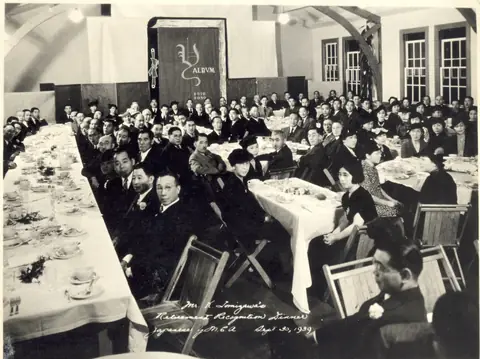
Kiyoshi Tomizawa retired as secretary at the age of 60, after 21 years. The Japanese Y.M.C.A. filled its hall with long tables for his retirement recognition dinner, under a banner reading “Y ALBUM 1918–1939.”キヨシ・トミザワは21年務めた主事を60歳で退きました。日本人YMCAは退職感謝晩餐会のために会場に長いテーブルを並べ、「Y ALBUM 1918–1939」の横断幕を掲げました。
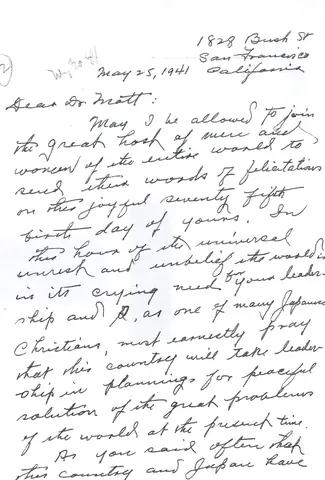
He kept writing to John R. Mott. In May 1941, congratulating Mott on his 75th birthday, he hoped that Japanese Christian leaders then visiting America could help find “some method for the restoration of friendship between this country and Japan.”トミザワはその後もジョン・R・モットに手紙を書き続けました。1941年5月、モットの75歳の誕生日を祝う手紙で、当時来米していた日本人キリスト者の指導者たちが「この国と日本の友好を取り戻す何らかの方法」を見いだせるよう願っています。
September 20, 19411941年(昭和16年)9月20日
Troop 12 turns ten第12隊、10周年
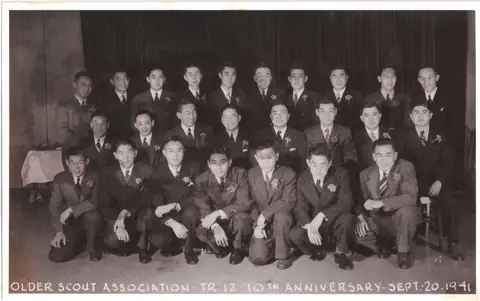
The Older Scout Association of Troop 12 celebrated its tenth anniversary in suits and boutonnieres. Many of its members also played basketball for the Y. Less than three months later came Pearl Harbor, and the next spring these young men and their families were ordered to leave.第12隊の年長スカウト会が、スーツに胸花をつけて10周年を祝いました。隊員の多くはYのバスケットボールチームの選手でもありました。それから3か月足らずで真珠湾攻撃が起こり、翌年の春、この若者たちと家族は立ち退きを命じられました。
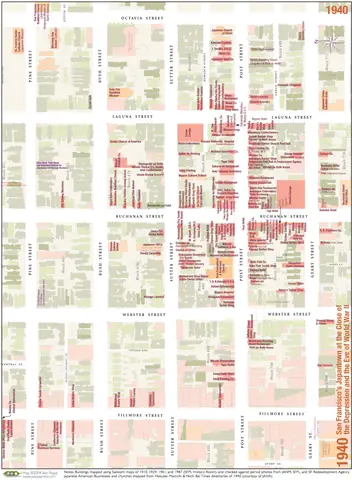
Ben Pease’s map shows the Japantown they lived in, block by block, as it was in 1940.ベン・ピースの地図は、彼らが暮らした1940年の日本町を街区ごとに示しています。
May 19421942年(昭和17年)5月
The day they had to leave立ち退きの日
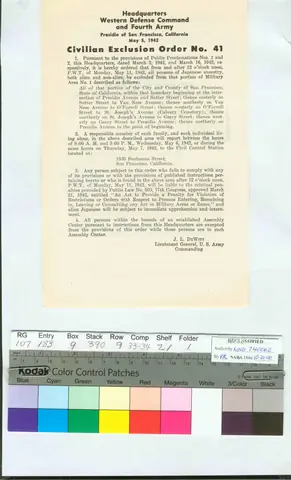
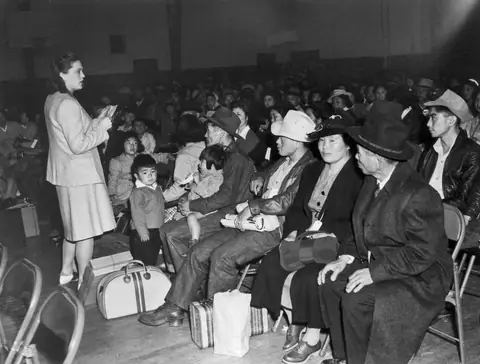
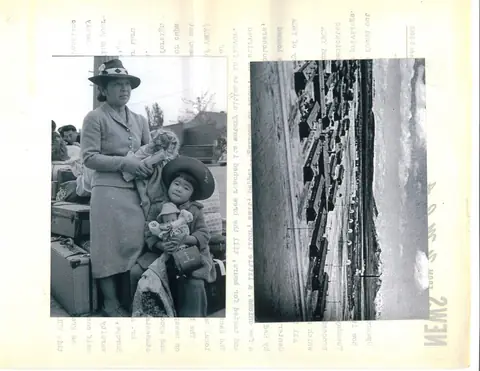
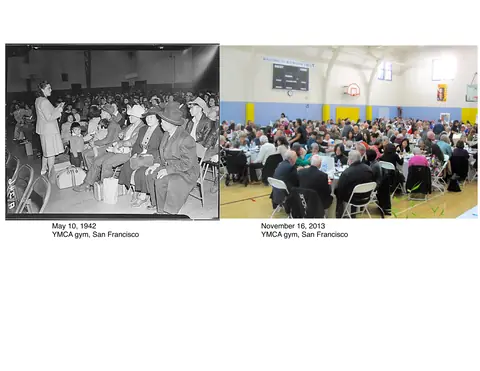
Civilian Exclusion Order No. 41, issued May 5, 1942, covered more than 40 blocks of Japantown, and it named “alien and non-alien” alike: American citizens included. One member of each family had to register at the Civil Control Station at 1530 Buchanan Street on May 6 or 7. Families were given numbers and luggage tags and told they could bring only what they could carry. On May 10 they left from the Y for the Tanforan Assembly Center.1942年5月5日に出された民間人立ち退き命令第41号は日本町の40余区画を対象とし、「外国人および非外国人」、つまり米国市民も含めて命じました。各家族の代表は5月6日か7日にブキャナン街1530番地の民間統制所で登録しなければなりませんでした。家族には番号と荷札が渡され、持てるだけの荷物しか持っていけないと告げられました。5月10日、人々はYからタンフォラン集合所へ向かいました。
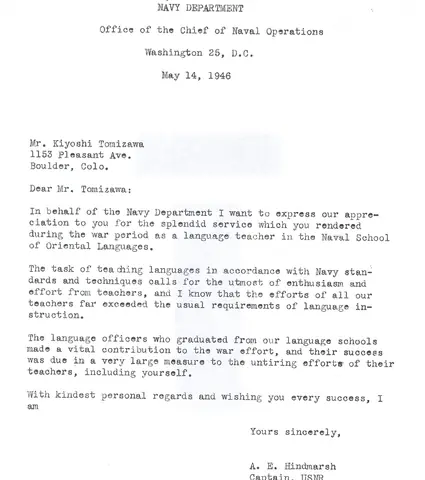
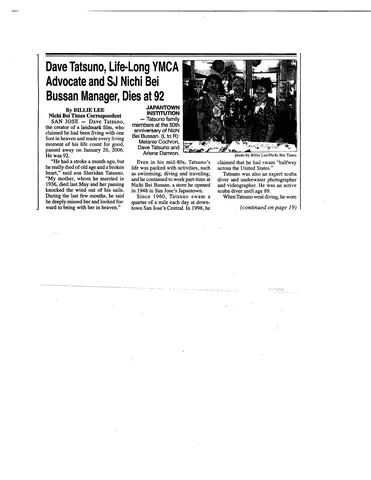
The Y’s people carried it with them. Dave Tatsuno, who had grown up at the Japanese YMCA, was sent to Topaz in Utah, where a YMCA was organized for those held there; he secretly filmed camp life with a movie camera smuggled in by a supervisor with YMCA ties. Kiyoshi Tomizawa spent the war teaching Japanese to Navy language officers at Berkeley and then Boulder.Yの人々はYを心に持ち続けました。日本人YMCAで育ったデイブ・タツノはユタ州のトパーズへ送られ、そこでは収容された人々のためにYMCAが組織されました。彼はYMCAとつながりのある監督者がひそかに持ち込んだ映画カメラで収容所の暮らしを撮影しました。キヨシ・トミザワは戦争中、バークレー、のちにボールダーで海軍の語学将校に日本語を教えました。
Spring 19471947年(昭和22年)春
Coming homeふたたびYへ
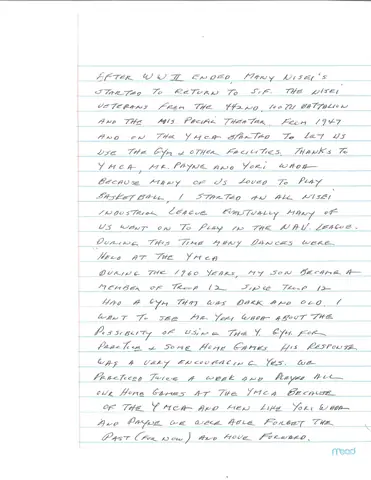
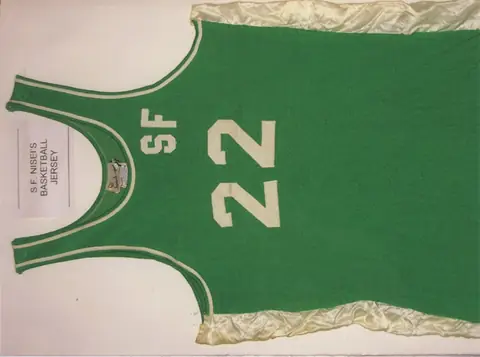
The building, used by the USO during the war, came back to the Y in the spring of 1947. A former player remembered that Nisei veterans of the 442nd, the 100th Battalion and the MIS were given the gym and other facilities “thanks to YMCA, Mr. Payne and Yori Wada,” and he started an all-Nisei industrial league.戦時中USOが使っていた建物は、1947年春にYへ戻りました。ある元選手は、第442連隊、第100大隊、MISから帰った二世の復員兵が「YMCA、ペイン氏、ヨリ・ワダのおかげで」体育館などを使えるようになったと振り返り、二世の実業団リーグを始めました。
“We will always be thankful to the YMCA for the dedication and fairness to all of us young and old.”「若者にも年配者にも、私たちみんなに尽くし、公平であってくれたYMCAに、いつまでも感謝します。」Nisei basketball memories二世バスケットボールの思い出
Dave Tatsuno reopened his family’s store in San Francisco and, after the death of his young son, dedicated his life to youth work at the YMCA. “The Y was my father and mother,” he said.デイブ・タツノはサンフランシスコで家業の店を再開し、幼い息子を亡くしたのち、YMCAの青少年活動に生涯をささげました。「Yは私の父であり母だった」と彼は語っています。
December 19501950年(昭和25年)12月
A Y for everyoneだれにも開かれたY
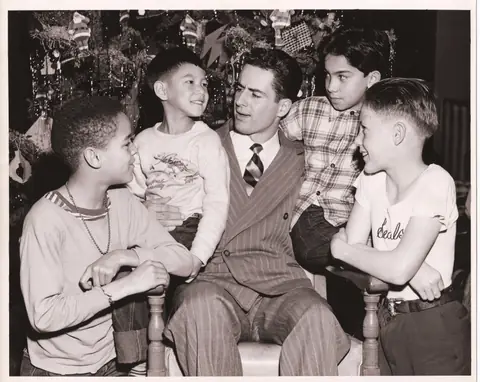
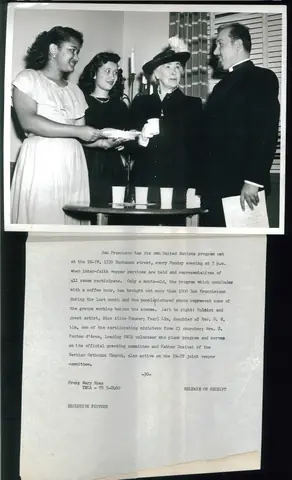
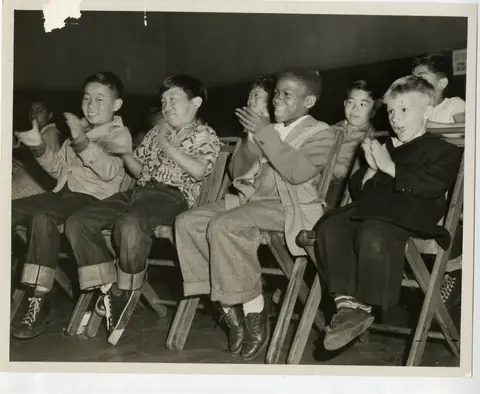
As the Buchanan Street YMCA and YWCA, the building served Japanese American, Black and other families under one board. At the Hobo Banquet, more than 150 children and adults “of all races, colors and creeds” came in patched clothes and paid to eat watered soup and stale buns. Fred Hoshiyama, the Y’s executive secretary, stirred the soup all day. The money went to the hungry in 26 countries.ブキャナン街YMCA・YWCAとなった会館は、一つの理事会のもとで日系、黒人、その他の家族に奉仕しました。ホーボー晩餐会には「あらゆる人種・肌の色・信条の」子どもと大人150人以上がつぎはぎの服で集まり、お金を払って薄いスープと固いパンを食べました。主事のフレッド・ホシヤマは一日中スープをかき混ぜ、集まったお金は26か国の飢えた人々に届けられました。
Every Sunday evening the YM-YW held inter-faith services in which people of all races took part: San Francisco’s own “United Nations program.”毎週日曜の夜には、あらゆる人種の人々が参加する宗派を超えた礼拝が開かれ、サンフランシスコ独自の「国連プログラム」と呼ばれました。
June–July 19601960年(昭和35年)6〜7月
Home to Homeホーム・トゥ・ホーム
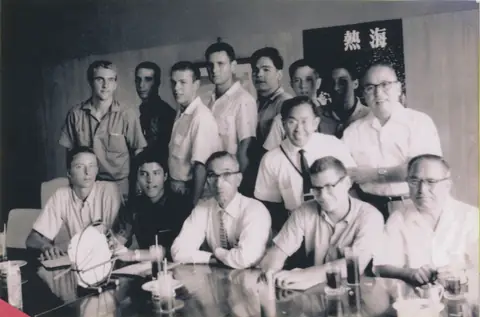
Ten boys aged 15 to 18 from San Francisco YMCAs traveled to Osaka, San Francisco’s sister city, in the first YMCA “Home to Home” youth exchange. Fred Hoshiyama, who had grown up at the Japanese Y, took their picture in the Osaka mayor’s home.サンフランシスコのYMCAから15〜18歳の少年10人が、姉妹都市・大阪を訪れました。YMCA初の「ホーム・トゥ・ホーム」青少年交流です。日本人YMCAで育ったフレッド・ホシヤマが、大阪市長宅で彼らを撮影しました。
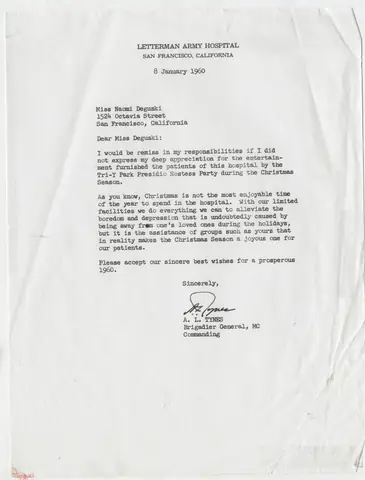
That January, the commanding general of Letterman Army Hospital had thanked a Tri-Y group for bringing Christmas entertainment to its patients.同じ年の1月には、レターマン陸軍病院の司令官が、入院患者にクリスマスの催しを届けたトライYのグループに感謝の手紙を送っています。
1963–19641963〜1964年
The membership drives会員募集キャンペーン
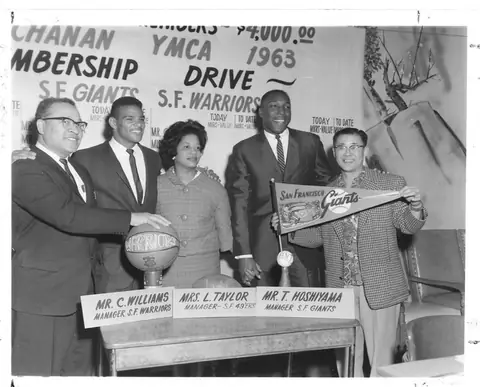
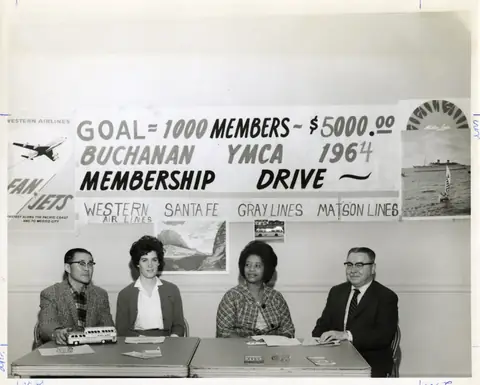
In 1963, teams named for the S.F. Giants, Warriors and 49ers raced to raise $4,000 in memberships. The 1964 drive aimed higher: “Goal = 1000 members ~ $5000.00.”1963年、S.F.ジャイアンツ、ウォリアーズ、49ersの名を冠したチームが会費4千ドルを目標に競いました。1964年のキャンペーンはさらに高く「目標:会員1000人・5000ドル」を掲げました。
January 19681968年(昭和43年)1月
Doors wide open開かれた扉
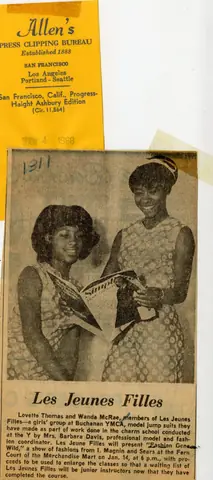
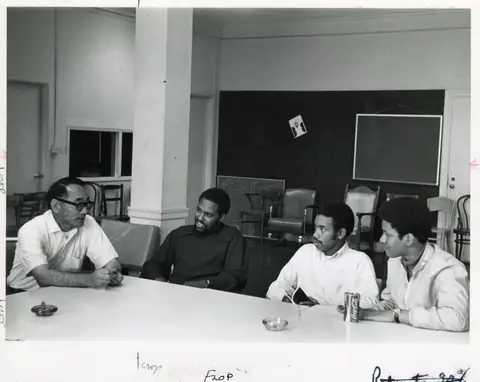
Under Yori Wada the Y kept its doors open to the neighborhood. Girls’ clubs such as Les Jeunes Filles and the Darnelles held dances and shows and played in the Bay Region Girls’ Basketball League. Les Jeunes Filles members Lovette Thomas and Wanda McRae modeled jumpsuits they had made in the Y’s charm school, taught by professional model Barbara Davis, before presenting their own fashion show.ヨリ・ワダのもと、Yは地域に扉を開き続けました。レ・ジューヌ・フィーユやダーネルズなどの少女クラブがダンスやショーを開き、ベイ地区女子バスケットボールリーグでプレーしました。レ・ジューヌ・フィーユのラヴェット・トーマスとワンダ・マクレーは、プロのモデル、バーバラ・デイビスが教えるYの教室で作ったジャンプスーツを披露し、自分たちのファッションショーを開きました。
1970s–2000s1970〜2000年代
A neighborhood Y地域のY
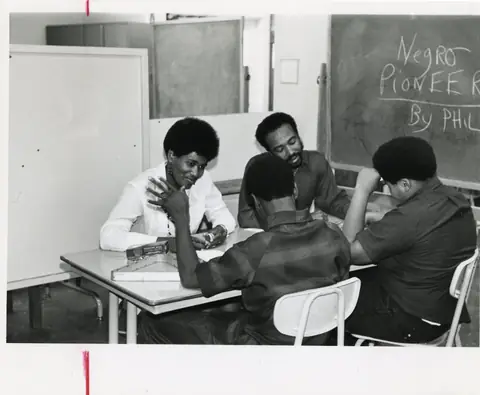
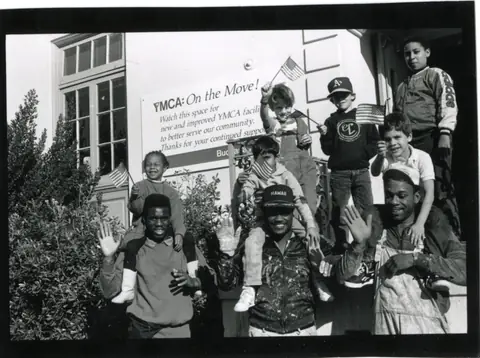
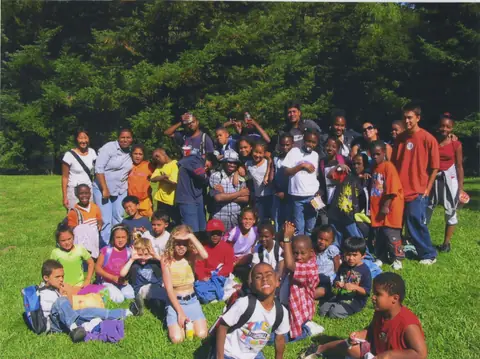
Photos from the following decades show classes and tutoring, games in the gym, a computer corner, bus trips to camp, and a sign promising “new and improved YMCA facilities to better serve our community.” Many are undated; the Photo Archive marks their dates as estimates.その後の数十年の写真には、授業や学習支援、体育館での遊び、コンピューターの一角、キャンプへのバス旅行、そして「地域のための新しく改良されたYMCAの施設」を約束する看板が写っています。多くは日付がなく、写真アーカイブでは推定の年代を示しています。
November 16, 20132013年(平成25年)11月16日
The same gym同じ体育館で
Seventy-one years after families waited in the gym with their luggage, it filled again, this time around dinner tables.荷物を手に家族が体育館で待たされてから71年。同じ体育館が、今度は食卓を囲む人々でいっぱいになりました。
People to remember心に留めたい人々
The people who made the Buchanan Y a homeブキャナンYを「わが家」にした人々
Kiyoshi Tomizawaキヨシ・トミザワ
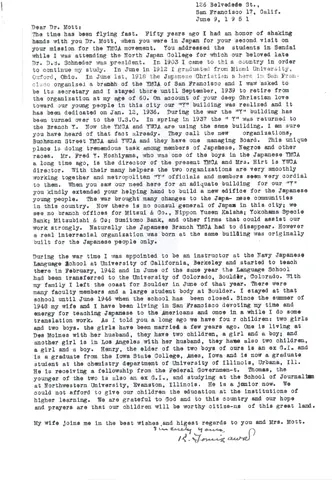
Secretary of the branch from 1918 to 1939. He helped raise the money for the Buchanan Street building, taught Japanese at the Navy School of Oriental Languages during the war, and in 1951 looked back in a letter to John R. Mott: “The time has been flying fast.”1918年から1939年まで分館の主事。ブキャナン街の会館の資金集めに尽くし、戦時中は海軍東洋語学校で日本語を教えました。1951年、ジョン・R・モットへの手紙で「時は飛ぶように過ぎました」と振り返っています。
Fred Y. Hoshiyamaフレッド・Y・ホシヤマ
He grew up at the Japanese Y and played on its tennis team in the 1930s. By 1950 he was its executive secretary, stirring the Hobo Banquet soup, and in 1960 he photographed the first Home to Home exchange in Osaka.日本人YMCAで育ち、1930年代にはテニスチームの一員でした。1950年には主事としてホーボー晩餐会のスープをかき混ぜ、1960年には大阪で最初のホーム・トゥ・ホーム交流を撮影しました。
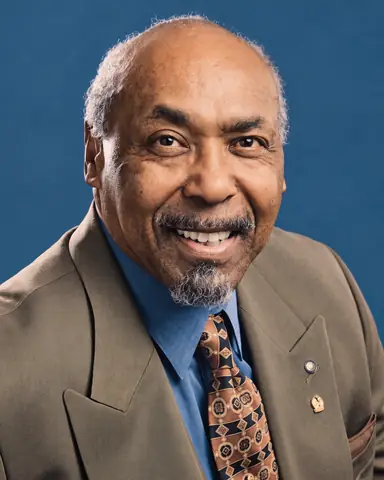
Yoritada “Yori” Wadaヨリタダ(ヨリ)・ワダ
Remembered by returning Nisei veterans for opening the gym to them after the war. He later led the Y and kept its doors open to the young people of the neighborhood.戦後、帰還した二世の復員兵に体育館を開いた人として記憶されています。のちにYを率い、地域の若者たちに扉を開き続けました。
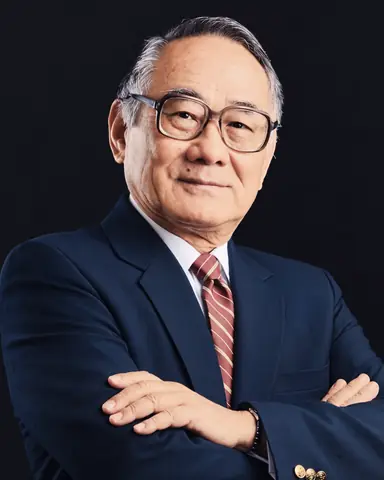
Dr. Richard C. Caesarリチャード・C・シーザー博士
Honored with Yori Wada on the timeline’s last page; his portrait from about 1996 was restored from a faded print for this project.年表の最後のページでヨリ・ワダとともにたたえられています。1996年ごろの肖像は、このプロジェクトのために色あせた写真から修復されました。
Dave Tatsuno (1913–2006)デイブ・タツノ(1913〜2006)
Grew up at the Japanese YMCA, ran on its relay team, served on its board from 1936, filmed life at the Topaz camp, and gave the rest of his life to YMCA youth work.日本人YMCAで育ち、リレーチームで走り、1936年から理事を務め、トパーズ収容所の暮らしを撮影し、残りの生涯をYMCAの青少年活動にささげました。